As an avid golfer and the administrator of ReviewCamSnow.com, a site dedicated to outdoor sports gear, I’ve spent over a decade evaluating hundreds of golf bags. I understand the critical elements that make a golf bag perfect for individual players, and just as importantly, how to care for it to extend its life. Your garage, while convenient, can be a harsh environment for your prized golf equipment if not properly managed. This guide will share practical insights and DIY solutions to keep your golf bag and clubs in pristine condition, ready for your next round.
Common Golf Bag Storage Challenges in Garages
|
Our Picks for the Best Golf Bag in 2026
As an Amazon Associate I earn from qualifying purchases.
|
||
| Num | Product | Action |
|---|---|---|
| 1 | Himal Outdoors Golf Travel Bag - Heavy Duty 600D Polyester Oxford Wear-Resistant, Excellent Zipper Universal Size with Wheels, Soft-Sided Golf Club Travel Cover to Protect Clubs |

|
| 2 | TaylorMade Pro Stand Bag, Lightweight, Ideal for Carrying or Push Cart |
|
| 3 | Golf Stand Bag - Lightweight Golf Bag with Stand and 7 Way Dividers, Dual Strap, Waterproof Pocket, Insulated Sleeve, Easy-Lift Handles and Swing-Cam Holder |
|
| 4 | Findway 14 Way Golf Stand Bag, Lightweight Golf Bag with Stand for Men Women, Golf Club Carry Bag with Dual Strap, Rain Cover, Multiple Pockets, Golf Ball Holder |
|
| 5 | Titleist Players 4 Golf Bag |
|
| 6 | Sun Mountain Men's C130 Lightweight Cart Golf Bag 14-Way Top - 2025 Model |
|
| 7 | Cart Golf Bag 15 Way Organizer Divider Top Golf Club Bags Lightweight Golf Cart Bags for Men Women with Cooler, Rain Cover |
|
| 8 | OGIO RIG 9800 Wheeled Suitcase (Stealth) |
|
| 9 | TaylorMade Pro Stand Bag, Lightweight, Ideal for Carrying or Push Cart |
|
| 10 | KVV Lightweight Golf Stand Bag with 7 Way Full-Length Dividers, 5 Zippered Pockets, Automatically Adjustable Dual Straps,Elegant Design |
|
Garages, by nature, are often uninsulated spaces susceptible to environmental extremes, posing several threats to your golf equipment. Understanding these challenges is the first step toward effective storage.
Temperature Fluctuations: Garages can experience significant temperature swings, from scorching summers to freezing winters. Extreme heat can weaken the adhesives that hold clubheads to shafts and make grips sticky and prone to deterioration. Conversely, freezing temperatures can make graphite shafts brittle and cause rubber grips to crack and lose their tackiness. Consistent temperature, ideally between 50°F and 85°F (10-30°C), is crucial to prevent material degradation.
Humidity and Moisture: High humidity is a golf bag’s nemesis, accelerating rust on metal club components and fostering mold and mildew growth on bag fabrics. Even subtle moisture can lead to internal damage around ferrules and shaft connections. A damp concrete floor is particularly problematic as moisture can seep into bags stored directly on it. Maintaining a relative humidity level between 30% and 50% is ideal to safeguard your gear.
Dust, Dirt, and Pests: Garages are rarely pristine. Dust, dirt, and debris can accumulate in and on your golf bag, requiring more frequent cleaning. Moreover, garages can be a haven for pests like spiders and rodents, which might build nests or chew through bag materials if given the opportunity. Elevating your bag off the floor is essential in combating these issues.
Physical Damage and Clutter: A golf bag simply leaning against a wall or sprawled on the floor is vulnerable to accidental knocks, scrapes, and punctures from other garage items. Beyond damage, it contributes to clutter, making your garage less functional and potentially creating tripping hazards. An organized storage solution not only protects your gear but also optimizes your space.
Preparing Your Golf Bag for Storage
Before stowing your golf bag away, a little preparation goes a long way in preserving its condition and ensuring its longevity. Neglecting these steps can lead to unpleasant surprises when you next hit the links.
Thorough Cleaning: After each round, wipe down your clubheads and shafts to remove any dirt, grass, or moisture. For your golf bag, empty all compartments and shake out any loose debris. Use a vacuum to clean pockets and a mild detergent with a soft cloth to spot clean any soiled fabric. Avoid harsh chemicals that could damage materials. This preventative cleaning prevents grime from settling in and causing long-term damage or odors.
Ensuring Dryness: Moisture is the enemy of golf equipment, leading to rust, mold, and material deterioration. After cleaning, ensure every component—clubs, grips, and the bag itself—is completely dry. If your bag has been exposed to rain, let it air dry thoroughly in a well-ventilated area for several hours or even overnight before storage. Placing silica gel packets inside pockets can help absorb any residual moisture.
Emptying Pockets: Remove all golf balls, tees, gloves, and other accessories from your bag. These items can add unnecessary weight, retain moisture, or attract pests. Clean and dry all accessories before storing them separately in airtight containers or designated shelves. This also gives you a chance to inspect and sort your gear.
Types of Golf Bag Storage Solutions (DIY & Commercial)
Choosing the right storage solution depends on your garage space, budget, and how many golf bags you need to store. From simple wall mounts to custom-built racks, there’s an option for every golfer.
Wall-Mounted Racks: These are excellent for saving floor space. Wall-mounted racks typically consist of sturdy rails or hooks that secure your golf bag upright against the wall. Many systems are modular, allowing you to add more storage as your collection grows. They keep your bag off the ground, protecting it from moisture, dust, and pests. Look for options with padded supports to prevent scratches.
Freestanding Organizers: If wall mounting isn’t an option or you prefer a more flexible solution, freestanding organizers are a great choice. These units typically hold one or more golf bags vertically and often include shelves or bins for accessories like shoes, balls, and towels. They provide stable support and can be easily moved if you rearrange your garage.
DIY Plywood Racks: For those with a knack for DIY, building a custom plywood rack can be a cost-effective and highly customizable solution. A basic design involves a sturdy frame with dedicated slots or bins for golf bags, plus shelves for accessories. This allows you to tailor the rack’s dimensions to your specific bags and available garage space. It’s a rewarding project that significantly enhances organization.
Hooks and Rail Systems: Simple, heavy-duty hooks can be screwed directly into wall studs to hang golf bags by their handles. For a more sophisticated system, a track or rail system allows you to attach multiple hooks and adjust their spacing. Some systems even offer golf-specific attachments for individual clubs, shoes, and other gear, creating a comprehensive storage hub.
Comparison Table: Storage Solutions at a Glance
| Feature / Solution | Wall-Mounted Racks | Freestanding Organizers | DIY Plywood Racks | Hooks & Rail Systems |
|---|---|---|---|---|
| Space Saving | High (utilizes vertical space) | Medium (occupies floor space) | Medium-High (can be customized) | High (utilizes vertical space) |
| Capacity | Varies (1-4+ bags) | Varies (1-4+ bags) | Customizable | Varies (1-4+ bags, plus accessories) |
| Flexibility | Medium (fixed once installed) | High (can be moved) | High (customizable design) | High (adjustable hooks) |
| Cost | Medium | Medium-High | Low-Medium (materials only) | Low-Medium |
| Ease of Installation/Build | Medium (drilling required) | Easy (minimal assembly) | Medium (basic carpentry skills) | Easy (drilling for hooks/rails) |
| Protection from Elements | Good (off floor, away from traffic) | Good (off floor) | Good (off floor, enclosed areas possible) | Good (off floor) |
| Accessory Storage | Often limited; some have shelves | Often integrated shelves/bins | Highly customizable shelves/bins | Excellent (multi-use hooks, bins) |
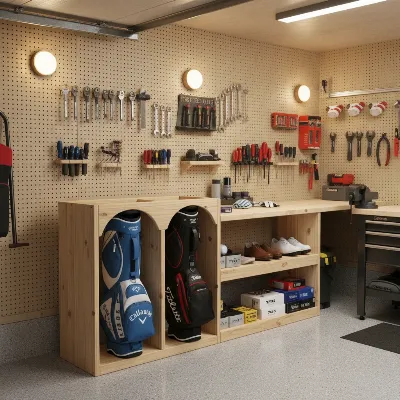 A neatly organized garage with a DIY plywood golf bag storage rack holding two stand bags and various golf accessories on shelves.
Building Your Own DIY Golf Bag Storage Rack
Creating your own golf bag storage rack is a fulfilling project that allows you to perfectly fit your space and needs. You don’t need to be a master carpenter to achieve a functional and sturdy result.
Planning Your Design: Before cutting any wood, sketch out your design. Consider how many golf bags you need to store, whether you want additional shelving for shoes, balls, or other gear, and the exact dimensions of your available garage space. Measure your golf bags (height and width) to ensure proper clearance. Vertical storage is usually best to save space and maintain bag shape.
Materials and Tools: For a basic plywood rack, you’ll typically need:
- Materials: Plywood (½” or ¾” thick for stability), wood screws, wood glue, and possibly a few 1×2 or 1×12 boards for specific structural elements or shelves. Iron-on plywood edge banding can give it a more finished look.
- Tools: Measuring tape, pencil, circular saw or table saw (for cutting plywood), drill, screwdriver, and possibly a nail gun or clamps for assembly. Safety glasses and gloves are a must.
Step-by-Step Assembly: Start by cutting your plywood pieces according to your design. Begin with the main frame—the base, back, and any major dividers. Use wood glue for added strength before securing pieces with screws. For golf bag slots, create dividers that keep each bag upright and separated. If adding shelves, measure and mark their positions carefully before attaching them securely. Ensure all connections are tight and stable. Sand any rough edges to prevent snags on your golf bag or clothes. Once assembled, consider applying a coat of clear sealant to protect the wood from moisture and wear in the garage environment.
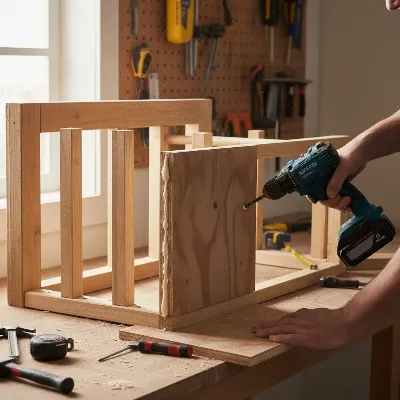 A close-up of hands working on a DIY golf bag storage rack, showing the assembly process with plywood and tools.
Essential Tips for Long-Term Golf Bag Protection
Even with an excellent storage solution, ongoing care is crucial to ensure your golf bag and clubs remain in top-tier condition for years to come.
Maintaining Optimal Environment: If possible, consider adding a dehumidifier to your garage, especially in humid climates. This helps maintain the ideal 30-50% humidity range, preventing rust and mildew. Avoid storing your golf bag near exterior walls, windows, or garage doors, as these areas are prone to greater temperature fluctuations and potential drafts. Interior walls offer more stable conditions. Ensure there’s adequate airflow around your storage area.
Using Protective Accessories: Always use headcovers on your clubs, especially when stored. This prevents dings, scratches, and keeps them protected from dust. A bag rain hood can also offer an extra layer of protection against dust and accidental splashes. Placing a few silica gel packets inside your golf bag and club pockets is a low-cost, effective way to combat any lingering moisture. For high-end club sets or very long storage periods, a breathable cloth cover over the entire bag can provide additional protection, but avoid non-breathable plastic, which can trap moisture.
Regular Inspections: Make it a habit to periodically check your golf bag and clubs, perhaps once a month or every few weeks. Look for any signs of rust on clubheads and shafts, cracking or stickiness on grips, or mold/mildew on the bag fabric. Early detection allows you to address issues before they become severe. Rotate your clubs within the bag occasionally to prevent any single club from bearing undue pressure or maintaining a bent position.
“A well-maintained golf bag is an investment, not just in your equipment’s lifespan, but in your consistent performance on the course. Environmental control and thoughtful storage are paramount.” – John Smith, Professional Club Fitter.
Conclusion
Safely storing your golf bag in the garage is more than just tucking it away; it’s an active process of preparation, protection, and smart organization. By understanding the environmental challenges, properly cleaning your gear, and implementing effective storage solutions—whether a purpose-built rack or a thoughtful DIY creation—you can significantly extend the life and performance of your golf equipment. Keeping your golf bag off the floor, away from extreme temperatures and humidity, and neatly organized will ensure your clubs are always ready for your next round, free from rust, mildew, and damage.
What steps will you take this weekend to transform your garage into a golf gear sanctuary?
Frequently Asked Questions
Will my golf clubs rust if I store them in an unheated garage?
Yes, golf clubs can rust in an unheated garage, especially if it experiences high humidity or significant temperature fluctuations that lead to condensation. Moisture is the primary cause of rust on metal club components.
What is the ideal temperature range for storing golf clubs?
Golf clubs are best stored in a stable environment with temperatures ranging between 50°F and 85°F (10°C to 30°C). Some experts suggest a narrower range of 50°F to 70°F for optimal preservation of grips and adhesives.
How can I protect my golf bag from mold and mildew in the garage?
To protect your golf bag from mold and mildew, ensure it is completely dry before storage, use silica gel packets inside pockets, and consider running a dehumidifier in your garage to maintain humidity levels between 30% and 50%.
Should I store my golf clubs upright or lying down?
Always store your golf clubs upright in your golf bag. Storing them horizontally or leaning against a wall can create pressure points that may cause shafts to warp or bend over time, particularly graphite shafts.
Are DIY golf bag storage racks as effective as commercial ones?
DIY golf bag storage racks can be just as effective, if not more, than commercial ones. They offer the advantage of being customized to your specific space and storage needs, often at a lower cost, provided they are built sturdily.
How often should I inspect my golf equipment while in storage?
It’s a good practice to inspect your golf equipment, including your bag, clubs, and grips, every few weeks or at least once a month. This allows you to catch any potential issues like rust, cracking, or mold early.
