A golf bag strap slips due to improper adjustment, worn materials, uneven weight distribution, faulty buckles, or twisted straps. Five quick DIY fixes include mastering strap adjustment, boosting friction with grip enhancements, balancing the bag’s load, inspecting and mending wear and tear, and reinforcing buckles or connection points. Addressing these issues can restore comfort and stability, allowing golfers to focus on their game.
Why Your Golf Bag Strap Keeps Slipping (Understanding the Root Causes)
Before diving into fixes, understanding the “why” behind your slipping strap is crucial. It’s often a combination of factors, not just one single issue.
Improper Adjustment & Fit: The most frequent culprit is simply an ill-fitting strap. If your strap is too long, it can sag and lose friction with your shoulder, especially with single-strap bags. For dual straps, uneven adjustment can lead to one side slipping more than the other, causing an imbalance. The bag should sit comfortably and securely on your back or hip without excessive movement.
Worn-Out Materials & Lack of Grip: Over time, the materials of your strap, such as smooth nylon or leather, can lose their original texture and grip, becoming slick. Padding can also flatten, offering less cushioning and friction, which allows the strap to slide freely. This loss of integrity is a clear signal that your strap is failing you.
Uneven Weight Distribution: A golf bag is rarely perfectly balanced. If your clubs and accessories are haphazardly packed, the weight can shift to one side, pulling the strap off your shoulder. This imbalance is particularly noticeable when walking on uneven terrain or lifting the bag quickly.
Faulty Buckles or Hardware: Sometimes, the buckle itself is the problem. A worn or loose buckle may not grip the webbing of the strap effectively, allowing it to lengthen gradually as you walk. Cracked plastic clips or weak metal components can also contribute to instability.
Twisted Straps & Poor Design: For dual-strap systems, straps that are twisted or not properly oriented can prevent them from sitting flat and securely on your shoulders. Some bag designs, particularly older models, simply have straps made from materials that inherently lack sufficient friction.
> “A good golf bag strap is like a good pair of golf shoes—when it works well, you barely notice it’s there. It allows you to focus entirely on your game rather than being distracted by discomfort or fatigue.” – Golf Equipment Specialist, GolfBagFactories.com
5 Quick Fixes for a Slipping Golf Bag Strap
Once you’ve identified the potential causes, it’s time to implement some practical, DIY solutions.
1. Master the Adjustment: The First Line of Defense
|
Our Picks for the Best Golf Bag in 2026
As an Amazon Associate I earn from qualifying purchases.
|
||
| Num | Product | Action |
|---|---|---|
| 1 | TaylorMade Pro Stand Bag, Lightweight, Ideal for Carrying or Push Cart |

|
| 2 | TaylorMade Pro Stand Bag, Lightweight, Ideal for Carrying or Push Cart |
|
| 3 | Himal Outdoors Golf Travel Bag - Heavy Duty 600D Polyester Oxford Wear-Resistant, Excellent Zipper Universal Size with Wheels, Soft-Sided Golf Club Travel Cover to Protect Clubs |
|
| 4 | Titleist Players 4 Golf Bag |
|
| 5 | Golf Stand Bag - Lightweight Golf Bag with Stand and 7 Way Dividers, Dual Strap, Waterproof Pocket, Insulated Sleeve, Easy-Lift Handles and Swing-Cam Holder |
|
| 6 | KVV Lightweight Golf Stand Bag with 7 Way Full-Length Dividers, 5 Zippered Pockets, Automatically Adjustable Dual Straps,Elegant Design |
|
| 7 | Findway 14 Way Golf Stand Bag, Lightweight Golf Bag with Stand for Men Women, Golf Club Carry Bag with Dual Strap, Rain Cover, Multiple Pockets, Golf Ball Holder |
|
| 8 | Cart Golf Bag 15 Way Organizer Divider Top Golf Club Bags Lightweight Golf Cart Bags for Men Women with Cooler, Rain Cover |
|
| 9 | Sun Mountain Men's C130 Lightweight Cart Golf Bag 14-Way Top - 2025 Model |
|
| 10 | OGIO RIG 9800 Wheeled Suitcase (Stealth) |
|
Proper strap adjustment is the quickest and most effective way to combat slippage. Don’t underestimate its importance; a small tweak can make a significant difference in comfort and stability.
- For Single Shoulder Straps: Place the strap over your dominant shoulder. Adjust the length so the bag sits comfortably at hip level. Ensure the weight is distributed evenly across the width of the strap, not concentrated in one area. A slightly shorter strap can provide a more reliable hold.
- For Dual Shoulder Straps: Adjust both shoulder straps so the bag sits high on your back, just below your shoulder blades. Fasten any chest or waist straps if your bag has them, as these significantly improve stability and prevent shifting. Make sure both straps are adjusted evenly for balanced weight distribution to prevent one side from pulling or slipping.
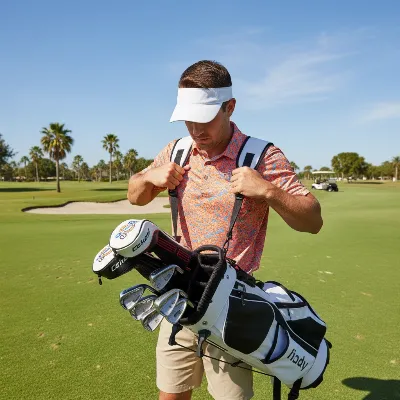 A golfer adjusting the dual shoulder straps of a stand bag on a golf course. The bag is high on their back, clubs visible, with a focus on their hands tightening the straps for a snug, balanced fit. Natural light, realistic style.
2. Boost Friction: DIY Grip Enhancements
If your strap material is too smooth, you can easily add friction to keep it in place.
- Rubber Bands or Hair Ties: A surprisingly effective trick is to thread a few sturdy rubber bands or hair ties around the strap, just below the buckle. This increases the friction, preventing the strap from loosening through the buckle over time.
- Non-Slip Grip Tape: Apply specialized non-slip grip tape (often found for sports equipment or tools) to the underside of the strap where it contacts your shoulder. Look for options with a rubberized texture.
- Fabric Patches: For a more permanent solution, you can sew a small piece of textured fabric, like rubberized shelf liner or a textured cloth, to the underside of the strap. This creates a grippy surface that helps the strap adhere to your clothing and shoulder.
3. Balance Your Load: A Stable Foundation
An unevenly packed golf bag is a recipe for a slipping strap. Proper organization can significantly improve stability.
- Even Weight Distribution: Distribute your clubs and other gear evenly throughout the bag. Try to place heavier items, like larger clubs or water bottles, towards the center or bottom of the bag to lower its center of gravity.
- Minimalist Packing: Carry only what you truly need for a round. Limit golf balls to a half-dozen, remove unnecessary apparel, and opt for lighter accessories. A lighter bag is inherently easier to carry and less prone to shifting and slipping.
4. Inspect & Mend: Addressing Wear and Tear
Regular inspection of your golf bag strap can catch problems before they become major issues.
- Check for Fraying and Tears: Inspect the strap fabric, especially at connection points and along the edges. If you find minor fraying, you can carefully trim loose threads with scissors and then lightly seal the edges with a lighter (for nylon straps) or apply a strong fabric glue to prevent further unraveling.
- Flattened Padding: If the padding on your strap has become compressed and offers no cushioning or grip, consider adding an aftermarket strap pad or replacing the entire strap. Flat padding contributes to discomfort and can make the strap more prone to slipping.
- Loose Stitching: Inspect seams where the strap attaches to the bag. If stitching is coming undone, reinforce it with a sturdy needle and strong thread using a backstitch for durability. This prevents the strap from detaching completely.
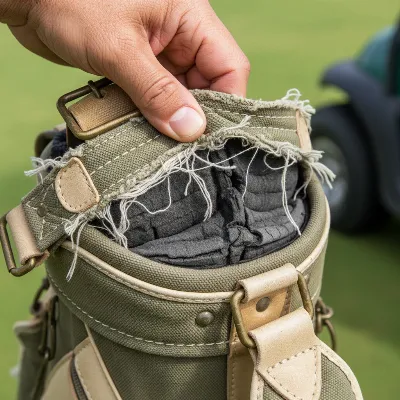 Close-up of a golfer's hand inspecting a worn and frayed golf bag strap, showing damaged stitching and flattened padding. Detail-oriented, realistic style, emphasizing the wear and tear.
5. Reinforce Buckles & Connection Points
Sometimes the strap itself is fine, but its connection points or buckles are failing.
- Tighten Loose Buckles: If a plastic or metal buckle is allowing the strap to slide, it might be worn out. For a temporary fix, you can try threading the strap back through the buckle in an alternative way to create more friction. If the buckle is broken, replacing it is often a straightforward DIY task. You can find replacement clips and buckles at hardware stores or online, and usually, they simply snap into place or require minimal sewing.
- Secure Connection Points: Ensure all clips, D-rings, or fabric loops where the strap attaches to the bag are secure and free from damage. If a clip is bent or broken, replace it to prevent unexpected detachment. For bags with stitched-on straps that are failing, a local cobbler or specialized repair shop might be able to re-stitch them for a more robust fix.
Beyond the Quick Fixes: Preventing Future Slips
While these quick fixes address immediate issues, considering long-term solutions can save you future frustration.
- Upgrade Your Straps: If your current straps are constantly slipping due to poor material or design, investing in aftermarket replacement straps can be a game-changer. Look for straps with built-in non-slip surfaces (like silicone or rubberized materials), ample contouring, and comfortable padding. Many companies offer premium replacement straps designed for better grip and weight distribution.
- Consider Dual-Strap Systems: If you frequently walk the course, a dual-strap (backpack-style) system offers superior weight distribution and stability compared to a single strap. This significantly reduces strain and the likelihood of slippage.
- Regular Maintenance: Just like your clubs, your golf bag strap benefits from routine care. Wipe down your straps with a damp cloth to remove dirt, sweat, and oils that can reduce friction. Store your bag in a cool, dry place to prevent material degradation.
Conclusion
A slipping golf bag strap doesn’t have to ruin your round. By understanding the common reasons behind the problem—from improper adjustment to worn-out materials—you can empower yourself with simple, effective DIY solutions. Whether it’s mastering your strap’s adjustment, adding grip-enhancing elements, balancing your bag’s load, mending wear and tear, or reinforcing buckles, these quick fixes can restore comfort and stability, letting you focus on your game. Don’t let a minor equipment issue become a major distraction. What simple DIY fix has made the biggest difference in your golf game?
Frequently Asked Questions
How do I adjust a dual-strap golf bag for optimal comfort and to prevent slipping?
For dual straps, adjust them so the bag sits high on your back, just below your shoulder blades. Ensure both straps are evenly tightened for balanced weight distribution, and utilize any chest or waist straps to secure the bag, preventing excessive movement and slippage while walking.
Can I add extra padding to my golf bag strap to prevent slipping?
Yes, adding extra padding can improve comfort and may help prevent slipping by increasing friction and distributing weight more effectively. You can purchase aftermarket strap padding kits or even sew on textured fabric patches to create a better grip against your shoulder.
What materials are best for golf bag straps to prevent slippage?
Straps made with silicone or rubberized materials on the underside are excellent for preventing slippage, as they provide superior friction. Thick, contoured padding, such as memory foam or gel, also helps by conforming to your shoulder and reducing movement.
Frequently Asked Questions
Why does my golf bag strap keep slipping off my shoulder?
Your golf bag strap likely slips due to improper adjustment, worn-out materials lacking grip, uneven weight distribution within the bag, faulty buckles, or twisted straps. Addressing these root causes with specific adjustments or repairs can resolve the issue.
How do I adjust a dual-strap golf bag for optimal comfort and to prevent slipping?
For dual straps, adjust them so the bag sits high on your back, just below your shoulder blades. Ensure both straps are evenly tightened for balanced weight distribution, and utilize any chest or waist straps to secure the bag, preventing excessive movement and slippage while walking.
Can I add extra padding to my golf bag strap to prevent slipping?
Yes, adding extra padding can improve comfort and may help prevent slipping by increasing friction and distributing weight more effectively. You can purchase aftermarket strap padding kits or even sew on textured fabric patches to create a better grip against your shoulder.
What materials are best for golf bag straps to prevent slippage?
Straps made with silicone or rubberized materials on the underside are excellent for preventing slippage, as they provide superior friction. Thick, contoured padding, such as memory foam or gel, also helps by conforming to your shoulder and reducing movement.
How can I make my golf bag strap more grippy if it's too smooth?
To make a smooth golf bag strap more grippy, you can thread a few sturdy rubber bands or hair ties below the buckle to increase friction. Alternatively, apply specialized non-slip grip tape or sew a textured fabric patch, like rubberized shelf liner, to the underside where it contacts your shoulder.
Fix a Slipping Golf Bag Strap
Learn five quick, do-it-yourself solutions to prevent your golf bag strap from slipping, improving comfort and stability on the course.
Properly adjust your golf bag strap(s) for optimal fit. For single straps, position the bag at hip level with even weight distribution. For dual straps, ensure the bag sits high on your back, just below your shoulder blades, with both straps evenly tightened and any chest/waist straps fastened.
Enhance grip by adding friction to the strap. Thread sturdy rubber bands or hair ties below the buckle, apply non-slip grip tape to the underside, or sew a textured fabric patch (like rubberized shelf liner) where the strap contacts your shoulder.
Distribute clubs and gear evenly throughout the bag to prevent shifting. Place heavier items towards the center or bottom to lower the center of gravity. Carry only essential items to reduce overall weight, making the bag more stable and less prone to slipping.
Regularly check your strap for fraying, tears, flattened padding, or loose stitching. Trim minor fraying and seal edges, consider aftermarket padding for compressed areas, and reinforce loose stitching with a sturdy needle and strong thread to prevent further damage.
Ensure all buckles and connection points are secure. If a buckle is worn, try re-threading the strap for more friction or replace it with a new clip from a hardware store. Inspect D-rings and fabric loops for damage and replace any bent or broken components to prevent unexpected detachment.

My dual-strap bag was always a mess, with one side feeling looser than the other. I never considered that uneven adjustment could be the problem until I read this. Taking the time to properly balance both straps has made carrying my bag so much more stable and comfortable. It feels like a brand new bag now, honestly.
I was so frustrated with my golf bag strap constantly slipping, especially on longer walks between holes. The tip about boosting friction with grip enhancements was a game-changer. I tried a simple rubberized grip tape on the underside of my strap, and it’s made a huge difference. No more constant readjusting, which lets me focus way more on my swing.
This was really helpful! I always thought my strap was just old, but after reading about uneven weight distribution, I realized I was loading my bag all wrong. Redistributing my clubs and accessories has made my carry much more comfortable. It’s still not perfect, but it’s a significant improvement and saved me from buying a whole new bag.
I tried a few of these fixes for my single-strap bag. While mastering strap adjustment helped a bit, my main issue seems to be worn materials on the strap itself. The advice about inspecting and mending wear and tear is good, but I was hoping for a more immediate solution for a really slick strap. Guess I’ll have to look into replacing it soon.